
Choosing furniture for your home is about more than appearance. Learn how to select the right furniture based on space, size, comfort, functionality, materials, storage, lifestyle and budget.
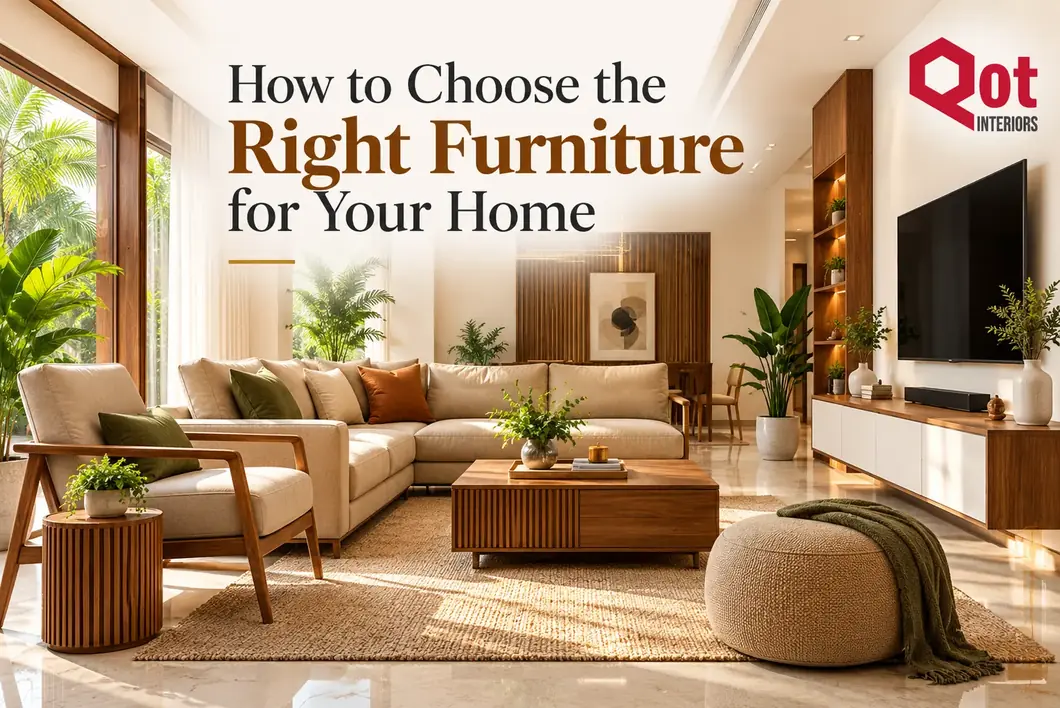
How to Choose the Right Furniture for Your Home: A Practical Guide to Size, Style, Comfort and Functionality
Choosing furniture for your home can seem simple at first. You may find a sofa, dining table, bed or wardrobe that looks perfect in a showroom or online and immediately want to buy it. But once it reaches your home, you may realise that it is too large, leaves little walking space, does not provide enough storage, or simply does not work with the rest of the interior.
The right furniture is not only about appearance. It needs to fit your space, support your everyday lifestyle, provide comfort and work well with the overall design of your home. This is particularly important when furnishing a new home, renovating an existing space or planning a complete home interior. Pasted text
So, how do you choose furniture that looks good and works well for years? Here are the important factors to consider before making a decision.
Why Choosing the Right Furniture Matters
Furniture has a direct effect on how a room looks and functions. The right pieces can make a room feel comfortable and organised, while poorly selected furniture can make even a spacious room feel crowded.
Before choosing furniture, think about:
- How much space is available
- How people will move around the room
- How the furniture will be used every day
- How much storage is required
- How comfortable it needs to be
- How easy it will be to maintain
- How it will work with the existing interior
- Whether it will continue to suit your needs in the future
A beautiful piece of furniture is not necessarily the right choice if it does not work for your lifestyle.
Measure Your Space Before Buying Furniture
One of the easiest ways to avoid a furniture mistake is to measure your space first.
Before ordering or purchasing anything, check the:
- Length and width of the room
- Wall dimensions
- Door and window positions
- Passage and walking areas
- Existing electrical points
- TV points
- Staircases
- Columns or other fixed elements
- Ceiling height where relevant
For example, a large sectional sofa may look comfortable in a showroom, but if your living room has limited circulation space, it could make the room difficult to use.
Similarly, a wardrobe should not only fit against the wall. You should also consider door openings, walking space and how easily you can access the wardrobe.
A simple rule: measure first, shortlist furniture second.
Choose Furniture According to the Room
Different rooms have different requirements. Furniture that works well in a living room may not be suitable for a bedroom or home office.
Living Room Furniture
The living room usually needs to balance seating, movement, entertainment and storage.
Before choosing a sofa, consider:
- Number of people who regularly use the room
- Available floor space
- TV placement
- Coffee table position
- Walking paths
- Additional seating
- Storage requirements
Avoid filling the entire room with furniture. Leaving enough open space can make the living room feel more comfortable.
Bedroom Furniture
Bedroom furniture should support rest, storage and easy movement.
Consider:
- Bed size
- Bedside tables
- Wardrobe requirements
- Dressing area
- Storage needs
- Door and window positions
- Walking space around the bed
A bedroom should feel calm rather than overcrowded.
Dining Room Furniture
When selecting a dining table, think about the number of people who regularly use it rather than choosing a size based only on appearance.
Consider the table size, chair placement and space required to comfortably pull chairs out and move around the dining area.
Home Office Furniture
For a home office, comfort and functionality are particularly important.
Think about:
- Desk size
- Chair comfort
- Storage
- Lighting
- Electrical points
- Computer and equipment requirements
- Available working space
A visually attractive desk is not useful if there is not enough space to work comfortably.
Entryway and Storage Furniture
Entryways often need practical storage without making the entrance feel crowded.
Depending on your requirements, you may need:
- Shoe storage
- Seating
- Small storage units
- Display shelves
- Key storage
The furniture should support the function of the space without blocking movement.
Furniture Size and Proportion Matter
Furniture should be proportional to the room.
A large sofa in a compact living room can dominate the entire space, while very small furniture in a large room can make the room feel disconnected.
Think about the relationship between:
Sofa → Coffee Table → TV Unit → Walking Space
Similarly:
Bed → Wardrobe → Bedside Tables → Walking Space
And:
Dining Table → Chairs → Walls → Passage
The goal is not simply to fit everything into the room. The goal is to create enough space for everything to work comfortably together.
What About Sofas?
Choose a sofa based on the room size, number of users and desired circulation. Check its overall dimensions rather than judging its size from photographs alone.
What About Coffee Tables?
The coffee table should work comfortably with the sofa without making movement difficult.
What About TV Units?
The TV unit should suit the wall and screen size while providing any storage or display space you actually need.
What About Wardrobes?
Wardrobes should be planned according to your clothing, accessories, luggage and other storage requirements rather than only the available wall space.
What About Dining Tables?
Consider the number of regular users, chair placement and available circulation around the dining area.
Comfort Should Come Before Appearance
A piece of furniture can look beautiful and still be uncomfortable.
When choosing seating, consider:
- Seat height
- Seat depth
- Back support
- Cushion comfort
- How long you normally use it
- Who will use it
- Cleaning and maintenance requirements
The same applies to beds and mattresses. A bedroom may have a beautiful design, but the most important purpose of the space is still rest and comfort.
Think about your actual lifestyle rather than choosing furniture simply because it looks good in a photograph.
Ready-Made vs Custom Furniture: Which Is Better?
There is no single answer. The better option depends on your space, requirements, budget and preferences.
|
Ready-Made Furniture |
Custom Furniture |
|
Available in standard sizes |
Designed according to your space |
|
Usually quicker to purchase |
Requires planning and production |
|
Easy to compare different options |
More flexibility in design |
|
Suitable for standard room layouts |
Useful for unusual spaces |
|
Limited customisation |
More control over storage and finishes |
|
Can be easier for smaller requirements |
Useful for complete interior projects |
When Ready-Made Furniture Makes Sense
Ready-made furniture can work well when:
- Your room has standard dimensions
- You find a suitable size and design
- You need furniture quickly
- You prefer easily replaceable pieces
- Your storage requirements are straightforward
When Custom Furniture Makes More Sense
Custom furniture can be useful when:
- Your room has unusual dimensions
- You have limited space
- You want furniture integrated with the interior
- You need a specific design or finish
- You are planning multiple spaces together
The decision should ultimately be based on what works best for your home rather than assuming one option is always better.
How to Choose the Right Furniture Material
The material you choose can affect durability, appearance, maintenance and overall cost.
Before selecting a material or finish, consider:
- How frequently the furniture will be used
- Whether it will be exposed to moisture
- How easy it is to clean
- The desired finish
- Expected durability
- Your budget
- The overall interior design
For homes in Kerala, environmental conditions and maintenance are also worth considering when selecting furniture materials and finishes. The choice should suit the particular room and how the furniture will be used.
Do not choose a material only because it looks attractive. Think about how it will perform in your everyday life.
Furniture for Small Homes and Apartments
Small spaces do not necessarily require less furniture. They require better-planned furniture.
Some practical solutions include:
Built-In Storage
Furniture designed around the available walls can make better use of otherwise unused areas.
Multi-Functional Furniture
Furniture that serves more than one purpose can be useful where space is limited.
Wall-Mounted Units
Wall-mounted furniture can help keep floor areas more open where appropriate.
Storage Beds
A bed with integrated storage can provide additional space without requiring another large piece of furniture.
Compact Dining Solutions
Choose a dining arrangement that suits the number of people who regularly use it rather than selecting a table that occupies unnecessary floor space.
Vertical Storage
Using available vertical space can increase storage without significantly reducing floor area.
The goal should not be to fill every available corner. Good furniture planning should make the home feel comfortable and easy to use.
How Furniture Should Work With Your Interior Design
Furniture does not need to match every other element in the room perfectly.
Instead, aim for visual balance between:
- Furniture colours
- Wood finishes
- Upholstery
- Flooring
- Wall finishes
- Lighting
- Existing furniture
- Decorative elements
For example, different wood finishes can work together when their tones and textures are thoughtfully balanced.
Similarly, a neutral sofa does not mean every other item needs to be neutral. Small differences in colour, texture and material can make a room feel more natural and personal.
The objective is coordination, not uniformity.
Common Furniture Selection Mistakes to Avoid
1. Buying Before Measuring
Why it becomes a problem:
Furniture may not fit the room or may restrict movement.
How to avoid it:
Measure the room and check the furniture dimensions before purchasing.
2. Choosing Furniture Only Because It Looks Attractive
Why it becomes a problem:
A beautiful piece may not be comfortable or practical for your lifestyle.
How to avoid it:
Consider appearance, comfort, functionality and maintenance together.
3. Buying Oversized Furniture
Why it becomes a problem:
Large furniture can make a room feel cramped.
How to avoid it:
Consider the furniture's dimensions in relation to the complete room layout.
4. Ignoring Walking Space
Why it becomes a problem:
People may have difficulty moving comfortably around the room.
How to avoid it:
Plan circulation before finalising furniture placement.
5. Not Considering Storage
Why it becomes a problem:
You may eventually need additional storage that was not included in the original design.
How to avoid it:
Think about your current belongings and future storage requirements before selecting furniture.
6. Ignoring Maintenance
Why it becomes a problem:
Some finishes require more cleaning or care than you may be willing to provide.
How to avoid it:
Choose finishes based on how much maintenance you are realistically prepared to handle.
7. Choosing Materials Without Considering Usage
Why it becomes a problem:
A material may not be suitable for the level of daily use or conditions of a particular room.
How to avoid it:
Select materials according to function, durability, maintenance and budget.
8. Buying Furniture That Does Not Suit the Room
Why it becomes a problem:
The furniture may technically fit but still make the room feel unbalanced.
How to avoid it:
Consider the complete room layout before purchasing individual pieces.
9. Following Trends Without Considering Lifestyle
Why it becomes a problem:
A trend may look attractive today but may not suit the way your family lives.
How to avoid it:
Use trends for inspiration while prioritising comfort and long-term functionality.
10. Forgetting Future Requirements
Why it becomes a problem:
Your family's storage and furniture requirements can change over time.
How to avoid it:
Consider possible future needs when planning major furniture pieces.
A Simple Furniture Buying Checklist
Before purchasing or ordering furniture, ask yourself:
☐ Have I measured the room?
☐ Have I checked the furniture dimensions?
☐ Will it fit through the entrance and doors?
☐ Have I considered door and window clearances?
☐ Is there enough walking space?
☐ Do I have enough storage?
☐ Is the material suitable for how I will use it?
☐ Is it comfortable?
☐ Is it within my budget?
☐ Does it work with my existing interior?
☐ Will it still be useful if my requirements change?
This simple checklist can help prevent many avoidable furniture decisions.
When Custom Furniture Makes More Sense
Custom furniture becomes particularly useful when standard furniture does not fully suit the available space or your requirements.
It can be considered for:
- Unusually shaped rooms
- Small apartments
- Built-in wardrobes
- TV units
- Specific storage requirements
- Modular kitchens
- Home offices
- Complete home interiors
For example, a wardrobe designed specifically for your bedroom can use the available wall space more effectively than a standard-sized unit. Similarly, a TV unit can be designed around the wall dimensions, electrical points, storage requirements and overall interior style.
Custom furniture does not automatically mean better or more expensive. Its value comes from being designed around a specific space and requirement.
Think About Furniture as Part of the Whole Interior
One common mistake is selecting furniture separately from the rest of the interior.
In a well-planned home, furniture decisions can be considered together with:
- Space planning
- Storage
- Lighting
- Flooring
- Wall finishes
- Electrical points
- Colours
- Materials
- Lifestyle requirements
This approach can help avoid situations where a furniture piece looks good on its own but does not work with the finished room.
For larger projects, planning furniture alongside the interior design can also make it easier to coordinate different rooms and maintain a consistent overall feel.
Frequently Asked Questions
1. How do I choose the right furniture size for my room?
Start by measuring the room and identifying doors, windows, electrical points and walking areas. Then compare those measurements with the dimensions of the furniture you are considering.
2. Is custom furniture better than ready-made furniture?
Neither is always better. Ready-made furniture can work well for standard spaces, while custom furniture can be useful when you need specific dimensions, storage or design requirements.
3. What should I consider before buying a sofa?
Consider the room size, sofa dimensions, seating capacity, comfort, fabric or finish, walking space and how frequently the sofa will be used.
4. Which furniture is best for small apartments?
Furniture with appropriate proportions, integrated storage and multiple functions can work well in small apartments. Built-in and wall-mounted solutions can also help where suitable.
5. How do I choose furniture materials for a Kerala home?
Consider the room's usage, moisture exposure, maintenance requirements, durability, finish and budget. The material should be appropriate for the specific conditions in which it will be used.
6. How can I make furniture match my interior design?
Instead of trying to make everything identical, coordinate colours, materials, wood tones, upholstery, flooring, lighting and wall finishes to create a balanced look.
7. What are the most common furniture-buying mistakes?
Common mistakes include buying without measuring, choosing furniture only for appearance, ignoring walking space, overlooking storage and maintenance, and selecting furniture without considering lifestyle.
8. When should I choose custom furniture?
Custom furniture can be useful when your space has unusual dimensions, when you need specific storage solutions, or when furniture needs to integrate closely with the overall interior design.
Final Thoughts
The best furniture for your home is not necessarily the most expensive, the biggest or the latest design. It is the furniture that fits your space, supports the way you live, feels comfortable and remains practical over time.
Before buying anything, measure your space, understand your requirements and think about how the furniture will actually be used. Consider comfort, storage, materials, maintenance and future needs rather than focusing only on appearance.
At QOT Interiors, we believe furniture should be planned around the way you live, not simply added to fill a room. From space planning and custom furniture to modular kitchens, bedrooms, wardrobes and complete home interiors, thoughtful planning can help create spaces that are comfortable, functional and personal.